


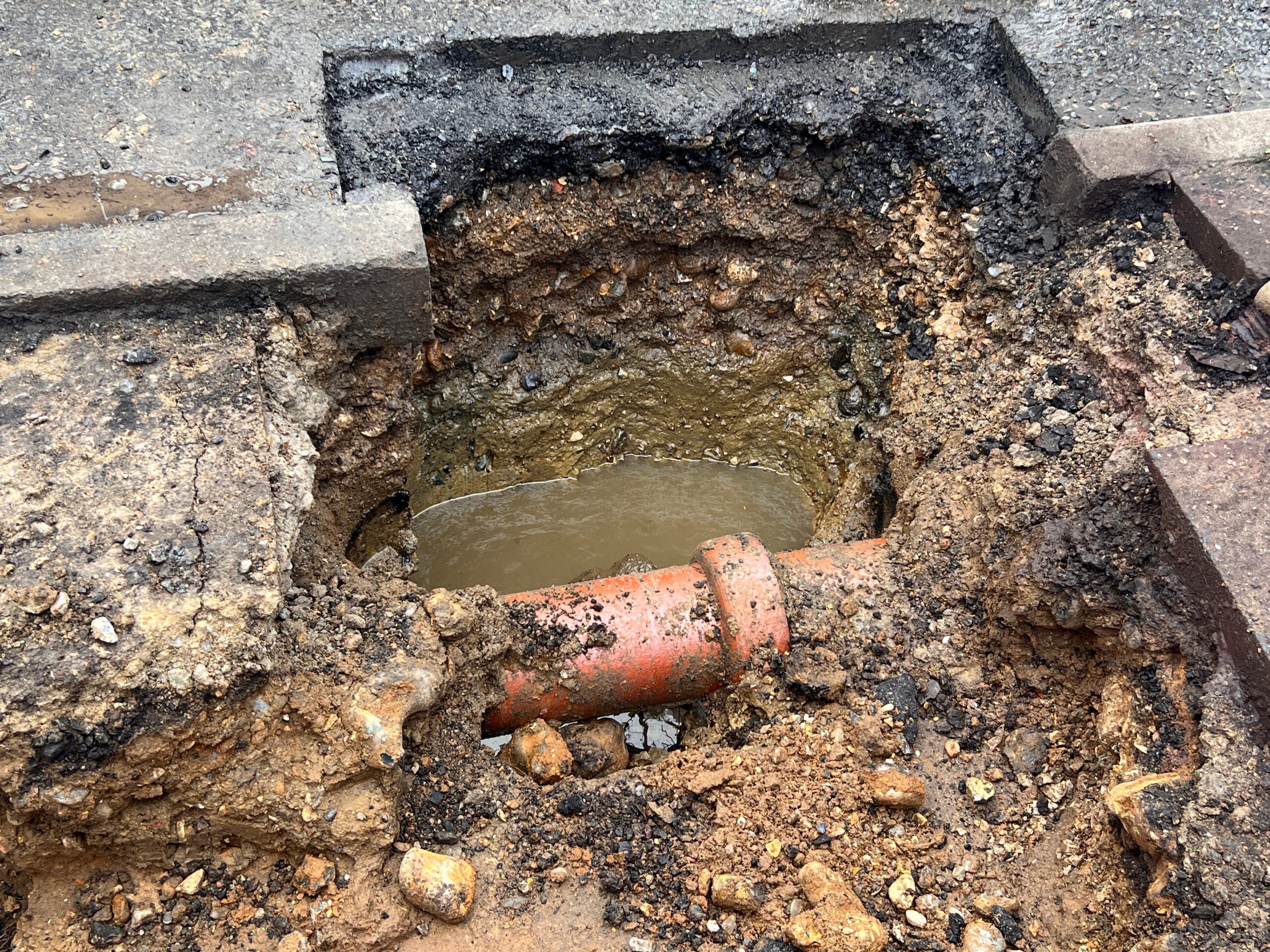
If you work residential jobs in New York City or the surrounding boroughs, you already know that what happens under the sidewalk can make or break a project. Brownstones in Brooklyn, prewar co‑ops on the Upper West Side, two‑families in Queens, and old housing stock in the Bronx and Staten Island all share the same quiet risk. Aging laterals that were never inspected, never mapped clearly, and often never upgraded.
On a routine call you might be there for a simple backup or slow drain. Once you run the camera, you see the real problem. Offsets under the sidewalk, root intrusion in a front yard that has no real yard, or broken pipe under a concrete stoop that nobody wants disturbed. In a dense city like New York, sewer line problems escalate quickly. A clogged or broken lateral can shut down a whole building, trigger neighbor disputes, or pull a city inspector into the conversation at the worst possible time.
For residential plumbers who want to grow, this is not just a nuisance. It is an opportunity to lead with smarter sewer line repair solutions that solve the problem without tearing the property apart.
Why New York Housing Makes Sewer Line Problems More Likely
New York’s housing stock is a mix of very old and very dense. Many buildings still rely on cast iron or clay laterals that have seen decades of freeze‑thaw cycles, street work, traffic vibration, and shifting soil. In neighborhoods where utilities and transit lines crowd the right‑of‑way, even a “small” sewer line repair can turn into a complex coordination exercise with DOT, inspectors, and sometimes multiple property owners.
Common risk factors you see every week include:
- Townhouse blocks with shared laterals and unclear responsibility.
- Large, established trees in tiny front yards, sending roots straight toward the line.
- Narrow streets where any open cut means permits, traffic control, and tense neighbors.
- Basement apartments that rely on every inch of working drainage to stay habitable.
Every one of these realities increases the odds that a simple call today turns into an emergency tomorrow. It also means traditional dig‑and‑replace is harder to sell and harder to execute without friction.
Why Sewer Inspections Are Now Essential On Every High‑Risk Job
In this market, skipping a camera inspection is a risk to your reputation. Sewer line rehabilitation starts with proof. Homeowners are hearing more about sewer line problems through friends, social media, and local real estate conversations. When you can show them live video of cracks, offsets, or root intrusion, the conversation shifts from “Is this really necessary?” to “How do we fix it for good?”
For plumbers, routine inspections on:
- Prewar homes and brownstones,
- Properties with chronic backups,
- Houses with visible settlement or patchwork sidewalk repairs,
- And buildings where prior owners “did it cheap,”
create a natural path to offer trenchless sewer repair and trenchless sewer line repair as premium solutions. Instead of crossing your fingers that the line will behave after a simple cleaning, you can propose a plan that restores structural integrity and protects the homeowner’s investment.
From Dig‑And‑Replace To Trenchless Sewer Repair
Traditional excavation in New York is rarely simple. Cutting concrete, working around stoops and iron fences, coordinating with other utilities, and managing debris in tight spaces drive up cost and stress for everyone involved. That is why more residential plumbers are building their business around trenchless sewer technology.
Cured in place pipe, or CIPP, allows you to rehabilitate a damaged lateral from the inside. A flexible liner saturated with resin is inserted into the existing pipe, then cured in place to form a new, seamless pipe. For New York properties, this often means:
- No need to demolish sidewalks or front steps.
- Less disruption to busy streets and tight driveways.
- Shorter project timelines and less noise for neighbors.
- Fewer surprises if you encounter buried utilities or old construction.
Instead of selling a homeowner on a large, messy excavation, you can position trenchless sewer line repair as the clean, predictable option that keeps their block looking the way it did when you arrived.
Taking CIPP Further With UV Cured Pipe Lining
As demand for trenchless solutions grows, newer methods give New York plumbers even more control. Traditional CIPP relies on heat or ambient curing, which ties quality to jobsite conditions and timing. UV cured CIPP uses ultraviolet light to cure the liner from the inside. Systems like LightRay UV pipe lining use LED technology to control the cure with precision.
In practice, that means:
- The liner stays flexible and stable during placement.
- You only cure when you are ready, by activating the UV light.
- There is no race against working time and less worry about weather.
- Install times drop sharply, often to minutes instead of hours.
On New York jobs where access windows are tight and buildings are stacked side by side, this level of control matters. UV cured pipe lining helps you deliver consistent results even when you are working in cramped basements or narrow front yards with curious neighbors watching every move.
How LightRay UV Pipe Lining Fits New York Residential Work
For a residential plumber, the right tools make the difference between “we will see how it goes” and “we know exactly how this job will finish.” LightRay UV pipe lining systems are designed for real‑world residential conditions, including small diameter laterals and spot repairs where you only want to fix the bad section.
Key advantages for New York work include:
- Rapid cure times that let you open the line and restore service fast.
- Predictable performance in basements and under slabs, where access is limited.
- Clean, low‑odor installs that keep homeowners and building managers comfortable.
- Compatibility with a wide range of sewer line rehabilitation scenarios, from root intrusion to cracks and minor collapses.
When you combine camera inspection, cleaning, and UV cured CIPP, you can turn a challenging urban lateral into a straightforward trenchless sewer repair project. The homeowner sees a professional process. You see a repeatable, profitable service line that sets you apart from “cheapest bid” competitors.
Clarifying Responsibility Before The Blame Game Starts
In New York, many homeowners and even some building managers still do not fully understand where their responsibility for sewer line repair begins and ends. They may assume that anything under the sidewalk or street is the city’s problem. On many blocks, that is not the case.
By educating customers early about:
- Which portion of the lateral they own,
- How failures in that line can affect neighbors and shared buildings,
- And what modern trenchless sewer technology can do to manage risk,
you position yourself as a trusted guide, not just another contractor. When a problem surfaces, they remember the plumber who explained cured in place pipe and UV cured CIPP clearly, not the one who only offered a quick clean and a shrug.
Building A Stronger New York Plumbing Business With Trenchless
For residential plumbers in New York, adding or expanding trenchless sewer line repair is about more than technology. It is about business model and reputation.
With the right systems and training, you can:
- Win higher‑margin jobs from homeowners who care about property value and disruption.
- Reduce callbacks by delivering structural repairs instead of temporary fixes.
- Turn difficult “problem houses” into showcase projects that generate referrals.
- Use before‑and‑after footage to educate future customers on why trenchless sewer repair is worth the investment.
LightRay UV pipe lining and other UV cured CIPP tools give you the confidence to take on tougher work while keeping quality high. When every block is dense, every weekend is busy, and every project lives under the watchful eyes of neighbors and city agencies, that confidence becomes a real competitive edge.
Your Next Step
If you are ready to move beyond basic cleaning and spot repairs and start offering full sewer line rehabilitation across New York’s oldest neighborhoods, now is the time to explore modern trenchless sewer technology. Look at how cured in place pipe solutions and UV cured pipe lining fit into the jobs you already see every month. Talk with your suppliers about LightRay UV pipe lining packages that match residential work. Then start with one or two carefully chosen projects and document the results.
In a city built on tight lots and older pipes, the plumbers who master trenchless sewer line repair will be the ones homeowners call first when the next backup hits.